Surrogacy IVF Calendar: What Surrogates Can Expect During a Medicated Embryo Transfer Cycle
If you are preparing to become a surrogate, one of the most important parts of the journey is understanding the surrogacy IVF calendar. While every fertility clinic has its own protocol, most gestational carriers complete a medicated frozen embryo transfer cycle rather than a natural cycle. This gives the clinic more control over timing, hormone levels, uterine lining development, and the exact transfer date.
For many surrogates, this calendar may feel intimidating at first. The good news is that your clinic, agency, and case manager will walk you through each step. Once you understand the purpose behind the medications and appointments, the IVF process usually feels much more manageable.
Why Surrogates Usually Use a Medicated IVF Protocol
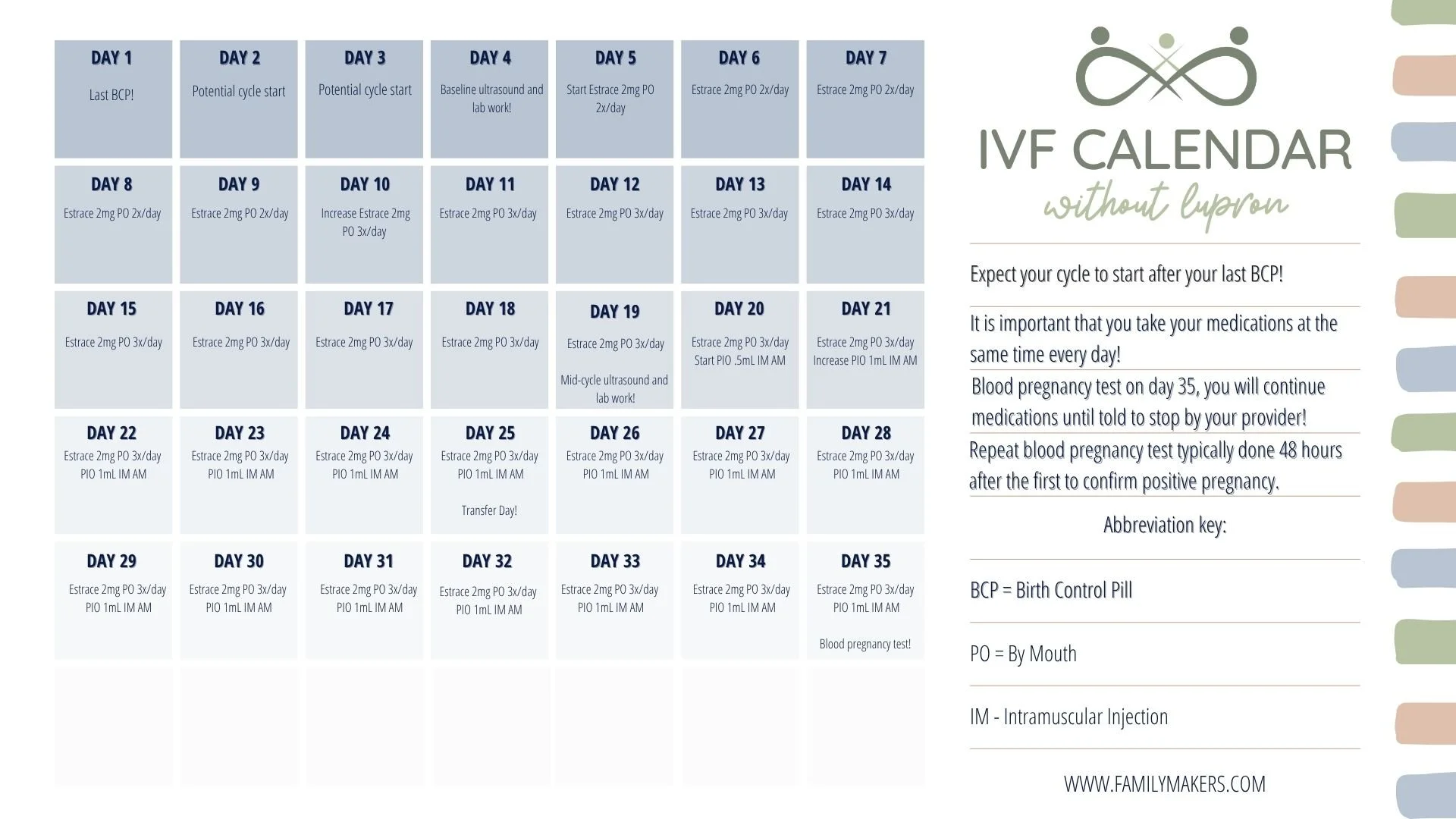
In a traditional natural cycle, the body relies on its own ovulation and hormone production to prepare the uterus for pregnancy. In a medicated embryo transfer cycle, the clinic uses hormone medications to prepare the uterine lining and time the embryo transfer more precisely.
For surrogacy, medicated protocols are commonly used because they allow the fertility clinic to coordinate several moving pieces: the surrogate’s cycle, the intended parents’ embryo availability, the fertility doctor’s schedule, legal clearance, travel plans, and the desired transfer window.
A frozen embryo transfer involves thawing a previously created embryo and transferring it into the uterus.
What Is a Surrogacy IVF Calendar?
A surrogacy IVF calendar is the fertility clinic’s written schedule for your embryo transfer cycle. It usually includes:
Medication start dates
Medication doses
Ultrasound appointments
Bloodwork appointments
Embryo transfer date
Pregnancy test date
Instructions for continuing medications after transfer
Your IVF calendar may change based on your lab results, lining check, clinic preferences, or how your body responds to medication. This is normal. The calendar is a guide, but the clinic may adjust it to give the transfer the best possible chance of success.
Common Medications Used in a Surrogate IVF Calendar
Most medicated surrogacy IVF calendars include some combination of Lupron, estradiol, and progesterone. Not every surrogate will use all three, and dosing can vary widely by clinic.
This information is educational only. Your fertility clinic’s instructions should always be followed exactly.
Lupron in a Surrogacy IVF Cycle
Lupron is a medication that may be used to temporarily quiet or suppress the body’s natural hormone cycle. In a medicated transfer protocol, Lupron can help prevent the surrogate from ovulating on her own before the clinic is ready.
This gives the fertility clinic more control over timing and allows them to prepare the uterus with carefully scheduled estrogen and progesterone support. Some clinics use Lupron routinely, while others use different medications or skip suppression depending on their protocol.
Possible Lupron side effects may include headaches, hot flashes, mood changes, fatigue, or temporary cycle-related symptoms. Every surrogate responds differently, and side effects should always be reported to the clinic.
Estradiol in a Surrogacy IVF Cycle
Estradiol, sometimes prescribed as Estrace, estrogen pills, patches, or injections, is commonly used to help build and support the uterine lining before embryo transfer.
The goal is to create a lining that is appropriately thick and receptive for the embryo. During this phase, the clinic will usually schedule ultrasounds and bloodwork to check how your body is responding.
Estradiol may be taken orally, vaginally, by patch, or by injection, depending on the clinic’s protocol. Estrogen is commonly used in frozen embryo transfer cycles to help prepare the uterus for implantation, often followed by progesterone support.
Possible estradiol side effects may include bloating, breast tenderness, nausea, headaches, or mood changes. These symptoms are common, but your clinic should be notified if anything feels severe or unusual.
Progesterone in a Surrogacy IVF Cycle
Progesterone is one of the most important medications in a medicated embryo transfer cycle. After the uterine lining has been prepared with estrogen, progesterone is added to help make the lining receptive for embryo implantation.
Progesterone timing matters. The embryo transfer is usually scheduled based on the number of days the surrogate has been exposed to progesterone. This is one reason it is so important to take progesterone exactly as instructed.
Progesterone is typically prescribed as an intramuscular injection, taken daily in the hip. Progesterone is used after embryo transfer for luteal phase support to help create a favorable environment for implantation and early pregnancy development.
Possible progesterone side effects may include soreness at injection sites, bloating, fatigue, breast tenderness, mood changes, constipation, or cramping. Some of these symptoms can feel similar to early pregnancy symptoms, which is why it is important not to overanalyze how you feel after transfer.
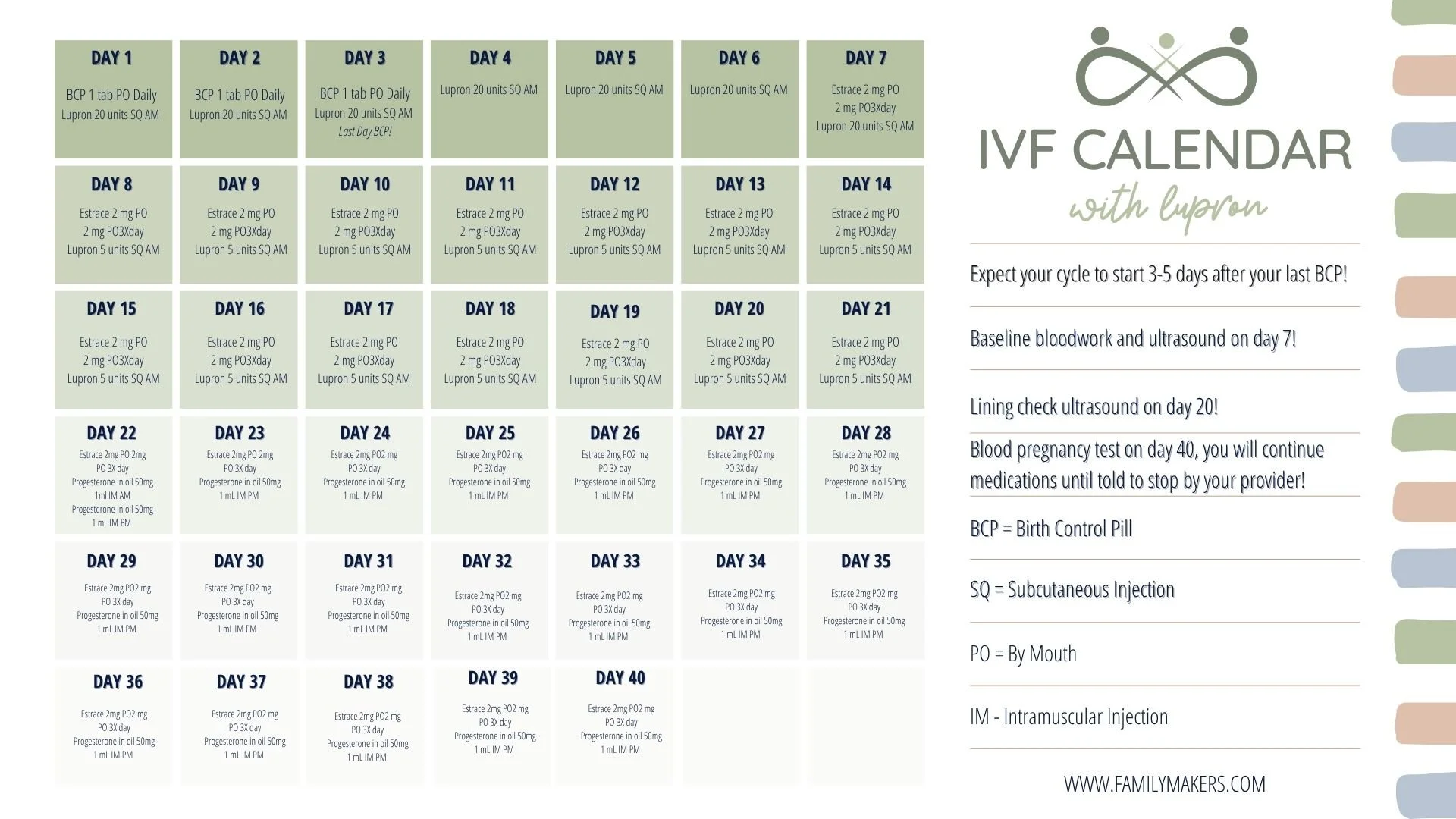
A Sample Surrogacy IVF Calendar
Every clinic is different, but a medicated surrogate IVF calendar may look something like this:
Cycle suppression begins
The surrogate may start birth control pills or Lupron, depending on the clinic’s protocol.
Baseline appointment
The clinic performs bloodwork and an ultrasound to confirm that the cycle is ready to begin.
Estradiol begins
Estrogen is started to help build the uterine lining.
Lining check
The clinic checks the uterine lining through ultrasound and may review hormone levels through bloodwork.
Progesterone begins
Progesterone is added once the lining is ready.
Embryo transfer
The embryo is thawed and transferred into the uterus.
Post-transfer medications continue
The surrogate continues medications exactly as instructed.
Pregnancy blood test
The clinic performs a blood test, often called a beta hCG test, to determine whether pregnancy has occurred.
Medication support continues if pregnant
If the transfer is successful, the clinic usually instructs the surrogate to continue medications for several weeks until the pregnancy is far enough along for the placenta to take over hormone production.
Why Medication Compliance Matters So Much
In a medicated surrogacy IVF cycle, the clinic is using medication to create the hormonal environment needed for transfer and early pregnancy. Missing doses, taking medications late, or stopping early can seriously disrupt the cycle.
Surrogates should set alarms, keep medications organized, ask questions early, and notify the clinic immediately if a dose is missed. It is always better to ask than guess.
What Surrogates Should Ask Before Starting IVF Medications
Before your calendar begins, ask your clinic or agency:
What medications will I be taking?
Will I be using injections, pills, patches, suppositories, or a combination?
What time of day should each medication be taken?
What should I do if I miss a dose?
Who do I contact after hours?
How long will I stay on medications if the transfer is successful?
Are there activity restrictions before or after transfer?
Clear instructions matter. A good surrogacy team will make sure you feel prepared before medications begin.
The Emotional Side of the IVF Calendar
For many surrogates, the IVF calendar is exciting because it means the journey is moving forward. It can also feel like a lot of responsibility. That is completely understandable.
You are not just taking medication. You are helping prepare for a hopeful pregnancy on behalf of intended parents who have often waited a very long time for this moment. The structure of the IVF calendar helps protect that process and gives the embryo transfer the best possible coordination and support.
Final Thoughts: The Surrogacy IVF Calendar Is a Team Effort
A surrogacy IVF calendar may look overwhelming at first, but you are not expected to figure it out alone. Your fertility clinic will provide the medical instructions, your agency will help you stay organized, and your support team will be there as you move through each step.
Most surrogates use a medicated IVF protocol because it gives the fertility clinic greater control over timing, lining preparation, and transfer coordination. Medications like Lupron, estradiol, and progesterone each play a different role in preparing the body for embryo transfer and early pregnancy support.
If you are considering becoming a surrogate, understanding the IVF calendar is one of the best ways to feel confident and prepared for the journey ahead.
At Family Makers, we believe surrogates deserve clear education, strong support, and a team that walks beside them from the first conversation through delivery and beyond. If you are interested in learning more about becoming a surrogate, we would be honored to help you understand the process.
Related Post: